Specialized travel planning for medical care, birth abroad, and professional journeys—so you travel stress-free and arrive confident.
Dec 25, 2025
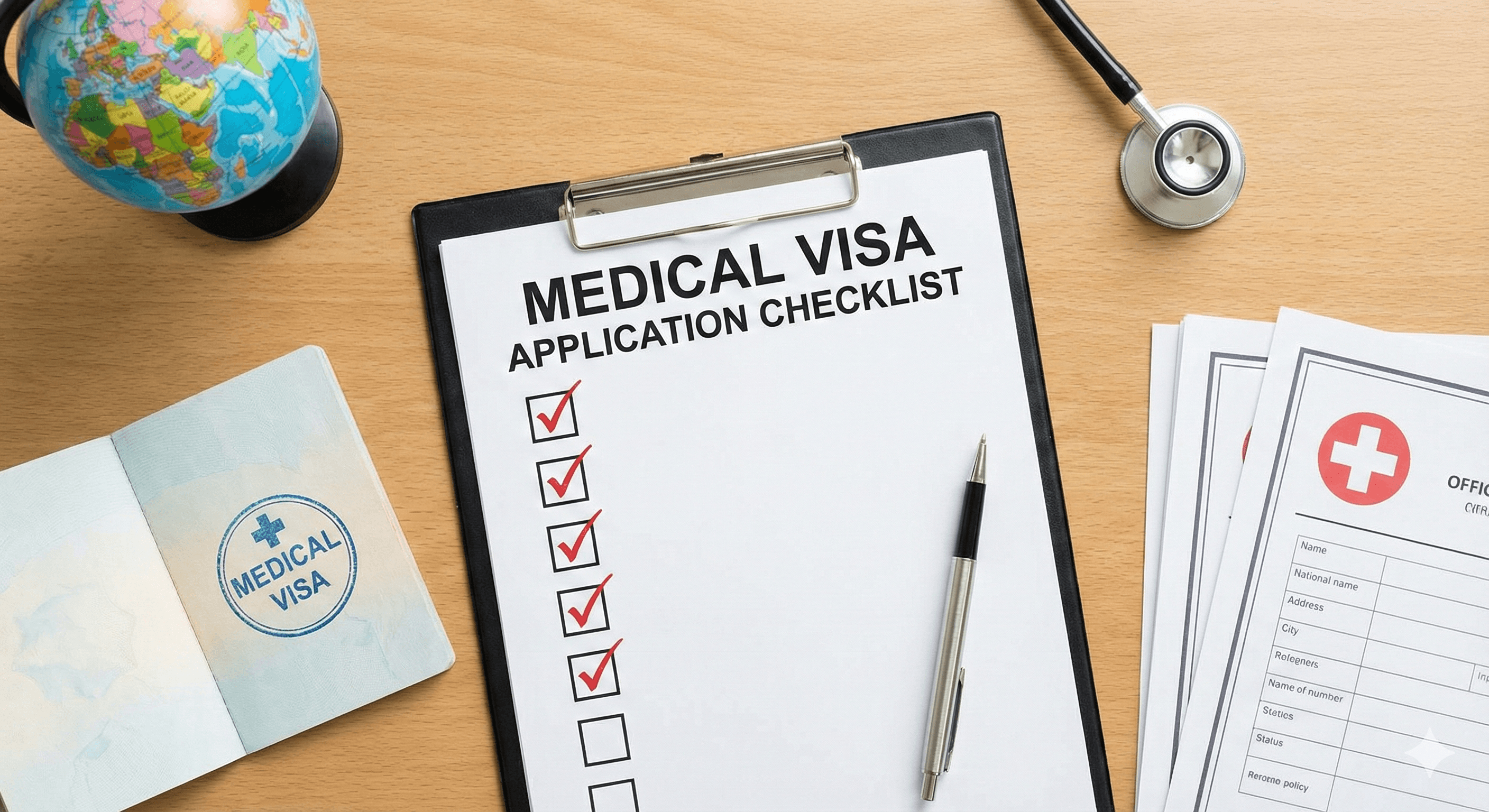
This guide is designed to demystify the complex process of applying for a medical visa.
Traveling abroad for medical treatment is already a stressful experience due to health concerns. The added layer of bureaucratic paperwork for a visa can feel overwhelming. However, with organized preparation and a clear understanding of the requirements, the process can be managed smoothly.
Disclaimer: Visa requirements vary significantly depending on your citizenship and the country you wish to enter. Always consult the official embassy or consulate website of your destination country for the most current, specific regulations. This guide serves as a universal framework.
The Golden Rule of Medical Visas
You must prove three things above all else:
Medical Necessity: You genuinely need treatment that is not readily available in your home country.
Financial Capacity: You can afford the treatment, travel, and accommodation without becoming a burden on the host country’s system.
Intent to Return: You have strong ties to your home country and intend to return after treatment (you are not using illness as a backdoor to immigration).
Phase 1: The Pre-Application Foundation
Do not start the visa application until these steps are complete.
1. ☐ Secure Local Medical Evidence
Before looking abroad, you need definitive documentation from your current doctors.
Get a comprehensive medical report detailing your diagnosis.
Obtain a written statement from your local specialist explaining why treatment abroad is necessary (e.g., procedure not available locally, lack of specialized equipment, long waiting times threatening your health).
2. ☐ Find a Foreign Provider and Get Accepted
You cannot apply for a medical visa without a confirmed destination.
Research hospitals/clinics abroad.
Send them your medical records for review.
Receive a preliminary acceptance for treatment.
3. ☐ The All-Important "Medical Visa Invitation Letter"
Once the foreign hospital accepts you, they must issue an official invitation letter. This is the single most critical document in your application. Ensure it includes:
Your full name and passport details.
The specific diagnosis.
The proposed treatment plan or procedure.
The estimated duration of the treatment (including recovery time).
An estimated cost of the treatment.
The doctor’s name and hospital’s professional license/registration details.
Phase 2: Gathering the "Paperwork Mountain"
Organize these documents neatly in a folder. Always have originals and two photocopies.
A. Personal Documentation
☐ Valid Passport: Must have at least 6 months of validity remaining beyond your expected return date and at least two blank visa pages.
☐ Previous Passports: (If applicable) To show travel history.
☐ Passport-Style Photos: Check the specific size requirements for the destination country (they vary).
☐ Completed Visa Application Form: Usually filled out online and printed.
B. Medical Documentation
☐ The Official Invitation Letter (from the foreign hospital mentioned in Phase 1).
☐ Local Medical Reports: Scans, X-rays, biopsy results, and doctor's notes from your home country.
☐ Proof of "Fit to Fly": A letter from your local doctor stating that you are stable enough to travel by air.
C. Financial Documentation
You must prove you can pay for everything. Embassies are very strict about this.
☐ Bank Statements: Usually the last 3 to 6 months. These must show sufficient funds covering the estimated treatment cost plus living expenses. Large, recent unexplained deposits can raise red flags.
☐ Income Proof: Pay slips, tax returns, or business registration documents.
☐ Sponsorship Letter (If applicable): If a relative, government, or insurance company is paying, you need an official affidavit of support, along with their financial documents proving they have the funds.
☐ Proof of Advance Payment: Receipts showing you have paid a deposit to the foreign hospital (this strengthens your application significantly).
D. Logistical Documentation
☐ Flight Itinerary: A confirmed booking is usually enough. Do not buy non-refundable tickets until the visa is approved.
☐ Accommodation Proof: Hotel bookings or a letter from the hospital stating you will stay at their facility during recovery.
Phase 3: The Application & Interview
1. ☐ Determine the Correct Visa Category
Different countries call it different things.
USA: Usually a B-2 Visitor Visa (marked for medical treatment).
UK/India/Others: Often have a specific "Medical Visa."
2. ☐ Pay the Fees
Pay the non-refundable visa application fee and keep the receipt.
3. ☐ Schedule the Interview
Most medical visas require an in-person interview at the nearest embassy or consulate. Book this as early as possible, as wait times can be long.
4. ☐ The Interview: Be Prepared
Dress neatly.
Know your case: Be able to explain your illness, what the treatment is, why you chose that specific hospital, and how long you will stay, without constantly looking at your papers.
Be honest: Never lie to a visa officer.
Focus on ties to home: If asked, emphasize your job, family, and assets back home to prove you intend to return.
Special Section: The Medical Attendant/Companion
Patients rarely travel alone. If a family member or caregiver is coming with you, they need a visa too.
☐ The "Medical Attendant Visa"
Many countries offer a specific visa linked to the patient's primary medical visa.
They usually need to apply at the same time as the patient.
Their application must state clearly that their sole purpose is to assist the patient.
They must also prove financial means for their own travel and stay.
Pro-Tips for a Smoother Process
Translations Matter: If your local medical records or bank statements are not in the language of the country you are visiting (or in English), you must have them officially translated and notarized.
Check Validity Dates: Ensure your requested stay matches the doctor’s estimated recovery time in the invitation letter. Don't ask for 6 months if the letter says treatment takes 2 weeks.
Medical Facilitators: If this process seems too daunting, consider hiring a reputable medical tourism facilitator. They handle the logistics of connecting with hospitals and guiding visa applications (for a fee).
Keep Records Accessible: Carry your crucial medical documents (invitation letter, prescriptions) in your carry-on luggage during travel, not checked bags.
Every journey is different. If something's not clear, or you just want to talk it through with someone who gets it. Reach out. We're real people, and we're happy to help.